Knowledge Base & Technical Insights

Industrial Welding &
Compressor Articles

Discover expert tutorials, buying guides, operational tips, and industry trends on MIG/MAG, Spot welding equipment and air compressors.

0%

China has become a major source of welding equipment for workshops, factories, construction projects, and metal fabrication businesses. This guide examines China’s top 10 MIG Welding Machine manufacturers through practical and verifiable criteria. Production capability, product consistency, certifications, technical support, and export experience all matter. The details matter.

A reliable manufacturer should provide stable arc performance, controlled wire feeding, and clear operating instructions. These factors affect weld appearance, penetration, spatter, and operator efficiency. We also consider machine power ranges, duty cycles, inverter technology, cooling systems, and compatibility with common welding wires. Real workshop conditions can reveal more than polished brochures. A machine may perform well during a short demonstration but struggle under continuous production loads.

Supplier evaluation also includes factory quality control, inspection procedures, spare-parts availability, warranty terms, and communication responsiveness. Buyers should request test welds, certification documents, and detailed technical specifications before placing an order. Customer feedback can be useful, although it should be checked against independent evidence. No ranking is perfect. Manufacturing quality may vary between product series, and published data is not always equally detailed. That limitation deserves attention.

This overview is designed for importers, distributors, fabricators, and professional users comparing Chinese welding equipment. It does not treat price as the only measure of value. Instead, it explains which manufacturers appear dependable, what their strengths may be, and where buyers should ask harder questions. Careful selection can reduce downtime, improve weld consistency, and support safer daily operations.
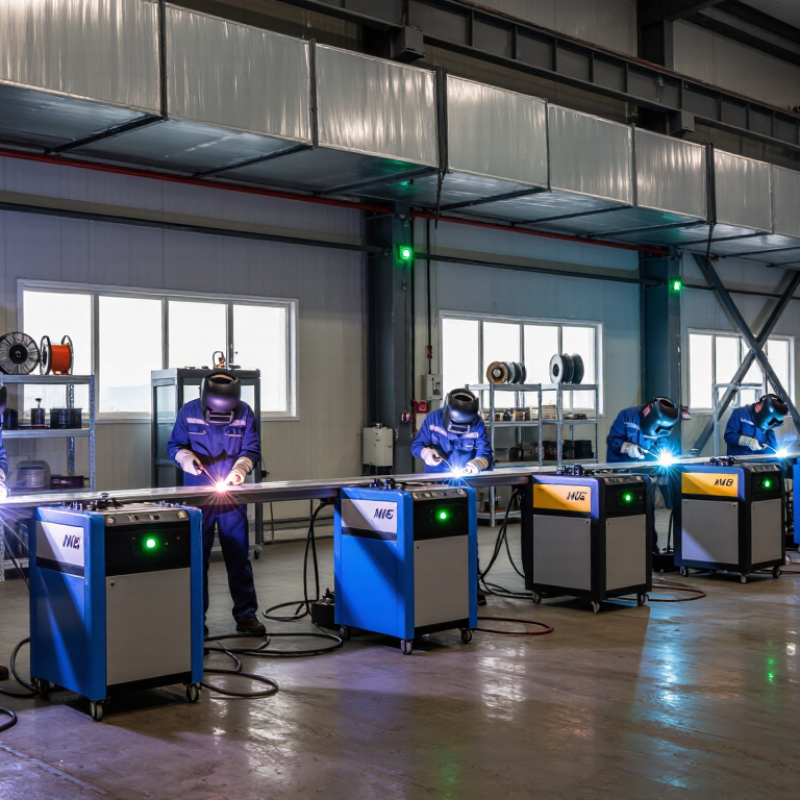
China Top 10 MIG Welding Machine Manufacturers?

What Is a MIG Welding Machine and How Does It Work?

When comparing China’s leading MIG welding machine manufacturers, buyers should understand the process before judging equipment.

MIG means metal inert gas welding, often called gas metal arc welding, or GMAW. A machine feeds continuous metal wire through a torch. The wire becomes both electrode and filler metal. An electric arc forms between its tip and the workpiece. That arc melts the wire and a small pool of base metal. The pool cools into the joint. Simple in appearance.

Shielding gas, often argon-rich or a carbon dioxide blend, flows around the arc. It limits oxygen and nitrogen contact, reducing porosity and unstable welds. The power source controls voltage and current, while wire speed affects deposition. Experienced operators match these settings to thickness, wire diameter, and joint position. A thin steel panel needs lower heat and careful torch movement. At a workshop, I watch arc sound, bead shape, and spatter before trusting a machine. A steady crackle helps, but it does not prove weld strength.

Machine quality also depends on feeding accuracy, cooling design, duty cycle, and dust protection. A smooth roller should move wire without flattening soft wire. Poor feeding creates irregular arcs, even with correct settings. I have seen clean-looking beads fail inspection because penetration was too shallow. That mistake changed my checklist: test coupons matter more than polished panels. Manufacturers should provide readable manuals, traceable specifications, and realistic duty-cycle data. Those details support honest equipment comparisons, though trained judgment remains essential.

Key Factors for Evaluating Chinese MIG Welding Machine Manufacturers

China Top 10 MIG Welding Machine Manufacturers?

When evaluating Chinese MIG welding machine manufacturers, price should not lead the decision. The global welding equipment market continues expanding, with Grand View Research reporting a projected CAGR of about 5.9% from 2024 to 2030. This growth increases supplier choices, but also increases quality differences. Check whether output ratings follow IEC 60974-1, especially the duty cycle measured at 40°C. A machine marked 60% duty cycle should sustain its rated current for six minutes within a ten-minute period.

Inspect the factory, not only the catalog. Ask for serial-number traceability, insulation test records, thermal protection tests, and component replacement procedures. During a practical evaluation, examine the wire feeder gears, torch connector, cooling fan, and PCB coating. These small details often predict service problems. A supplier with ISO 9001 certification is useful, but certification alone proves little. Review recent audit records and production samples.

Request independent load-test data and a sample machine for continuous welding. Compare arc stability at low current, wire feeding during long runs, and restart performance after overheating. MarketsandMarkets identifies automation and energy efficiency as major welding equipment trends, so check digital control accuracy and standby power consumption. Be cautious with unusually low quotations. They may reflect thinner housings, cheaper capacitors, or limited spare parts. Not every defect appears during a short demonstration. That is the uncomfortable part. A written warranty, local technical support, and documented spare-parts availability deserve equal attention.

China Top 10 MIG Welding Machine Manufacturers? - Key Factors for Evaluating Chinese MIG Welding Machine Manufacturers

Anonymized comparison framework based on practical procurement criteria for Chinese MIG welding machine suppliers. Values are benchmark ranges or verification requirements rather than company-specific claims.

Supplier Profile Typical MIG/MAG Output Range Rated Duty-Cycle Benchmark Relevant Product Certifications Quality-System Evidence Production Capability Indicator Customization Capability Export Readiness Warranty Benchmark Service Response Target Evaluation Score
Manufacturer Profile 01 200–500 A 60% at rated current CE; applicable IEC documentation ISO 9001 certificate and traceable inspection records Automated assembly and load testing High: OEM panels, connectors, software parameters Strong: export packaging and multilingual manuals 12–24 months Within 24 hours on business days 92/100
Manufacturer Profile 02 250–600 A 60% at rated current CE; RoHS where applicable ISO 9001 with incoming and final inspection controls Dedicated welding-equipment production lines High: voltage ranges, wire-feed configuration, branding Strong: standard export documents and spare-parts lists 12 months Within 24–48 hours 90/100
Manufacturer Profile 03 160–400 A 60% at rated current CE; EMC and safety test reports ISO 9001 and documented corrective-action process In-house PCB assembly and functional testing Medium to high: control layout and accessory options Strong: container-loading and export support 12–18 months Within 48 hours 87/100
Manufacturer Profile 04 200–500 A 50–60% at rated current CE; regional compliance package available ISO 9001 or equivalent audited quality system Batch production with routine aging tests Medium: enclosure, cable, torch and label customization Strong: export carton and documentation controls 12 months Within 48 hours 85/100
Manufacturer Profile 05 180–350 A 60% at rated current CE; user manual and declaration of conformity Factory inspection records available for review Medium-volume assembly and sample testing Medium: input voltage, plug, torch and packaging options Established: regular export experience 12 months Within 48–72 hours 83/100
Manufacturer Profile 06 250–630 A 50–60% at rated current CE; applicable safety and EMC evidence Quality-system documentation should be independently verified Heavy-duty assembly and thermal testing High: industrial control functions and interface options Established: export support available 12 months Within 48 hours 82/100
Manufacturer Profile 07 160–300 A 40–60% at rated current CE; country-specific documents on request Basic quality records and pre-shipment inspection Flexible batch production Medium: housing color, labels and standard accessories Established: standard export packing 12 months Within 72 hours 79/100
Manufacturer Profile 08 200–400 A 40–60% at rated current CE; technical file subject to product model Factory audit recommended before order approval Standard assembly with manual functional testing Medium: voltage, connector and packaging changes Established: common export documentation 12 months Within 72 hours 77/100
Manufacturer Profile 09 160–350 A 40–50% at rated current CE; compliance scope requires model confirmation Supplier questionnaire and sample inspection required Small-to-medium batch capability Medium: cosmetic and accessory customization Developing: export process available but should be confirmed 12 months Within 72 hours 74/100
Manufacturer Profile 10 200–500 A 40–50% at rated current CE or equivalent documentation subject to verification Third-party audit and pre-shipment testing recommended Standard production with outsourced components Low to medium: mainly labels and packaging Developing: buyer should verify export references 12 months Within 3 business days 71/100
Key verification points: Confirm the rated output and duty cycle under the applicable test standard; request certificates for the exact model; review factory-audit findings, production test records, spare-parts availability, warranty exclusions, sample weld performance, and after-sales response procedures before placing a purchase order.

China’s Top 10 MIG Welding Machine Manufacturers

China’s Top 10 MIG Welding Machine Manufacturers reflect a market shaped by automation, export demand, and stricter quality expectations. Grand View Research estimates the global welding equipment market will expand at about 5% annually through 2030. China remains a major production base, supported by broad supply chains for inverters, torches, wire feeders, and control boards. However, production volume alone cannot prove manufacturing excellence.

A practical top-ten comparison should examine duty cycle, arc stability, energy efficiency, and repair access. Machines rated under IEC 60974-1 deserve closer attention, especially for workshops running eight-hour shifts. Independent inspection reports should verify output current, insulation safety, electromagnetic compatibility, and thermal protection. The International Energy Agency also reports that industrial efficiency improvements increasingly depend on electrification and better motor control. That trend raises the value of inverter-based MIG systems.

Real-world testing reveals details that brochures often miss. A stable arc should produce even beads on 3-millimeter steel, with limited spatter and predictable wire feeding. A useful supplier provides load-test records, spare-part availability, and technician training. Not every leading manufacturer performs equally well in harsh environments. Some published efficiency figures may reflect laboratory conditions, not dusty factory floors. Buyers should therefore compare audited data, field feedback, and warranty response times before ranking China’s top 10 MIG welding machine manufacturers.

How to Compare Product Quality, Technology, and Certifications

When comparing China’s top MIG welding machine manufacturers, product quality should begin with repeatable welds, not polished brochures. Inspect arc stability at low and high amperage, wire feeding under load, and duty-cycle performance after thirty minutes. A stable arc leaves a narrow, even bead, with limited spatter. Request test records using the same wire, gas, plate thickness, and joint design. Otherwise, comparisons become unreliable.

Technology matters when it solves a workshop problem. Check synergic control, inductance adjustment, thermal protection, digital displays, and compatibility with robotic interfaces. The International Federation of Robotics reported 541,302 industrial robot installations worldwide in 2023, up 2% year on year. That growth increases demand for accurate communication and repeatable parameters. Still, more software does not always mean better welding. I have seen complicated menus slow operators during simple repairs. Certification requires careful reading. IEC 60974-1 addresses arc-welding equipment safety and performance, while ISO 3834 focuses on quality requirements for fusion welding. ISO 9001 supports process management, but it does not certify every weld. Ask for current certificates, test reports, calibration records, and the exact factory covered. Verify whether certification applies to the machine model, production site, or only the company. Independent inspections remain valuable, even when documents look complete.

China Top 10 MIG Welding Machine Manufacturers: Comparison Criteria

This weighted comparison model helps evaluate established MIG welding machine manufacturers without ranking or identifying individual companies. Product quality and welding performance receive the highest weighting, followed by quality-management systems, inverter technology, service capability, and documented compliance with standards such as ISO 9001, IEC 60974-1, ISO 3834, and CE requirements.

How to Select the Right Chinese Manufacturer for Your Needs

China Top 10 MIG Welding Machine Manufacturers?

How to Select the Right Chinese Manufacturer for Your Needs

Choosing a Chinese MIG welding machine manufacturer requires more than comparing prices. A reliable supplier should show factory details, production records, and clear quality procedures. Request photos of assembly lines, test benches, and finished machines. Better still, arrange a live video inspection. A polished website proves very little.

Match the manufacturer’s experience with your work. Ask about welding current stability, duty cycle testing, wire feeder quality, and compatibility with local voltage. Request test welds using your preferred wire and metal thickness. Examine the bead appearance, spatter, penetration, and machine temperature after continuous use. Small details matter.

Check whether the supplier provides traceable certificates and complete technical documents. Confirm spare-parts availability, repair training, warranty response time, and packaging standards. Ask who handles problems after delivery. Get answers in writing. Cheap equipment can become expensive when production stops.

Do not select a manufacturer from a ranking alone. Some “top ten” lists may reflect marketing, not verified performance. Visit an independent inspection company when possible, although inspections also have limits. I have seen suppliers pass basic tests yet struggle with long-term service. That risk deserves attention. Start with a small order, record every agreement, and judge the manufacturer by repeated evidence rather than confident promises.

FAQS

What should I check before comparing prices?

Check rated current, duty cycle, voltage compatibility, and continuous-welding performance. A low quotation may hide cheaper capacitors or thinner housings. Price is only one clue.

How can I verify the manufacturer’s factory?

Request assembly-line photos, test-bench images, and finished-machine records. A live video inspection is better than a polished website. Ask to see serial-number tracking.

Which technical tests matter most?

Request independent load-test data and a sample machine. Test arc stability, wire feeding, restart performance, and temperature during long welding runs. Short demonstrations can mislead.

How should duty cycle be evaluated?

Check whether ratings follow IEC 60974-1 and use measurements at 40°C. A 60% duty cycle should support rated current for six minutes within ten minutes. Heat matters.

What machine parts deserve close inspection?

Examine feeder gears, torch connectors, cooling fans, and PCB coating. These details often reveal future service problems. Small parts matter.

How can I test compatibility with my production work?

Request test welds using your preferred wire and metal thickness. Inspect bead appearance, spatter, penetration, and machine temperature. Use real materials, not convenient samples.

What support should the supplier provide after delivery?

Confirm warranty response time, spare-parts availability, repair training, and packaging standards. Ask who handles technical problems locally. Get every promise in writing.

Can a ranking identify the best manufacturer?

Not reliably. Some rankings may reflect marketing instead of verified performance. Independent inspections help, but they also have limits. I would start with a small order.

How should digital features and energy use be checked?

Test control accuracy, standby power consumption, and protection against overheating. Ask for measured data rather than broad claims. Digital controls are not automatically better.

What warning signs suggest future problems?

Be cautious when records are incomplete, answers change, or spare parts lack clear availability. A supplier may pass basic tests yet struggle later. That risk is uncomfortable.

Conclusion

This guide explains what a MIG Welding Machine is and how it uses a continuously fed wire electrode, shielding gas, and controlled electrical current to create stable, efficient welds. It outlines the main factors for evaluating Chinese manufacturers, including product quality, manufacturing capabilities, technical innovation, safety features, after-sales support, production capacity, and compliance with recognized certifications. These criteria help buyers understand how different suppliers approach reliability, performance, and long-term value.

The article also presents a practical framework for comparing leading Chinese manufacturers without focusing on brand names. It considers welding output, duty cycle, material compatibility, automation options, energy efficiency, quality control, and certification documentation. Finally, it explains how to select the right manufacturer according to application requirements, budget, order volume, customization needs, delivery expectations, and technical support. By using a structured evaluation process, purchasers can make a confident and informed decision when sourcing a dependable MIG Welding Machine.


Charlotte

Charlotte

Charlotte is a professional marketing specialist with a strong understanding of the company’s products, customers, and industry landscape. Through a combination of market research, strategic planning, and clear communication, she helps translate complex product features into practical value for......